Siapa ekstremis..?

*ibtimes.com

Dunia (atau sekurang-kurangnya siapa yg baca suratkhabar) telah dikejutkan dgn sebuah insiden yg dahsyat yakni pembunuhan 90+ remaja dan 90+ lagi cedera di sebuah pulau di Norway. Tahukah anda salah satu reaksi pertama apabila tersebarnya berita tersebut?

"Ni mesti ekstremis Islam nih..terrorist!"

Wah2..pantas sahaja menuduh. Dan akhirnya terbukti org tersebut bukanlah muslim pun malah anti-muslim..

Kasihan sungguh kpd remaja-remaja yg telah tertipu dan terbunuh oleh penjenayah tersebut. Utk maklumat lanjut, baca lah kedua-dua link di atas (maaf dalam bahasa Inngeris..itu yg saya jumpa..).

Namun begitu, di sini kita bukanlah ingin berbincang panjang lebar mengenai isu tersbeut. Kali ini, insyaAllah kita akan berbicara mengenai EKSTREMIS. Haa..perkataan yg hangat diperkatakan dan dipergunakan dalam pelbagai situasi di merata tempat. Dan selepas itu, timbul pula panggilan utk mengamalkan 'Islam sederhana'. Baiklah, mari kita ulas sedikit perkara ini.

Pertama sekali, mengenai Islam..Islam adalah agama yg sederhana secara naturalnya atau secara lahiriahnya. Apa buktinya??

1. Islam merangkumi semua aspek kehidupan. Cara makan. Cara minum. Cara berpakaian. Cara berinteraksi. Ia satu cara hidup. Apabila kita mengambil kira semua aspek kehidupan, kita tidak boleh melebihkan yg satunya dan melupakan yg lain. Kita perlu seimbang..sederhana! Bukannya solat 24 jam semata-mata..bukan pada satu aspek kehidupan sahaja.

2. Terdapat hadith-hadith seperti berikut:
“Telah binasa orang-orang yang berlebihan.” Baginda mengucapkannya sebanyak tiga kali.
[HR Muslim]
“Hati-hatilah kalian dari sikap ghuluw (berlebihan dan melampaui batas) dalam menjalankan agama ini, karena sesungguhnya sesuatu yang membinasakan orang-orang sebelum kalian adalah sikap ghuluw dalam menjalankan agama.”
[HR Ahmad, An-Nasa’i, dan Ibnu Majah]
Cukuplah dua poin tersebut mengenai kesederhanaan Islam.

Persoalan kedua pula ialah, siapakah sebenarnya yang digelar ekstrimis (dalam BI, extremist)? Jawapannya terdapat dalam video ini (ia dalam bahasa Inggeris juga).


Dalam video tersebut, Baba Ali telah melakonkan watak seorang lelaki ingin membeli daging. Lelaki tersebut telah bertanya sama ada daging itu halal. Tidak puas hati dengan jawapan pertama, dia telah bertanyakan asal usul daging itu sehingga mendapatkan nombor telefon penternak yg telah menjual daging itu. Dia pun menelefon penternak tersebut dan brtnyakan pelbagai soalan termasuklah menyuruhnya mengucapkan syahadah mmbuktikn kebenaran Islamnya dan keadaan lembu yang dipeliharanya..tidakkah itu melebih-lebih? Takkan la sampai nak tanya perasaan hidup lembu yang telah disembelih...?

Dan itulah contoh seseorang yg ekstrimis. TETAPI..ini bukanlah utk memudahkan kita melabel org lain. Ini adalah supaya kita menjauhkan diri dari termasuk ke dalam golongan yg 'berlebihan dalam agama'. Sekian. ^^

Eh2..kejap3..saya hampir terlupa. Sesuatu yg berkenaan "Extremist/Terrorist" juga: Because He Is A Muslim. Sesuatu yg boleh direnung-renungkan. :D

Testimonials of Prophet Muhammad (Peace Be Upon Him)

*Post ini ditaip dalam bahasa inggeris bagi mengelakkan kesalahan dalam peralihan bahasa. Tetapi jika anda memerlukan penterjemahan juga, anda boleh gunakan Google Translate (namun perlu diberitahu juga bahawa sesetengah penterjemahan ayat boleh menjadi kurang tepat maksudnya)*

*vectorise.net
And We Have Not Sent You
But As A Mercy To The Worlds
Surah 22: al-Anbiya', Verse 107

The following are testimonials (statements/comments) from various people about our beloved Prophet Muhammad PBUH. These were taken from the book The Prophet of Islam Muhammad Biography & Pictorial Guide.

John Adair
Author of "The Leadership of Muhammad". Chair of Leadership Studies United Nations System Staff College in Turin

"In Islamic thought, model leaders were simultaneously both exalted and humble, capable of vision and inspiration, yet at the same time dedicated to the service of their people. As you read these pages, you will, I hope, be able to judge for yourself just how close Muhammad comes to this ideal. My argument in this book is that this ideal - glimpsed more than once in the life of the Prophet Muhammad - accords well with what with know to be the universal truth about the nature and practice of leadership."


William Montgomery Watt
(1909-2006) A Scottish historian and Emeritus Professor in Arabic and Islamic Studies at the University of Edinburgh. Author of "Muhammad at Mecca", Oxford, 1953, p. 52

"His readiness to undergo persecutions for his beliefs, the high moral character of the men who believed in him and looked up to him as a leader, and the greatness of his ultimate achievement - all argue his fundamental integrity. None of the great figures of history is so poorly appreciated in the West as Muhammad."


Karen Armstrong
A British academic and writer . Winner of TED Prize 2008.
Author of "Muhammad A Prophet For Our Time" 2007

"Muhammad was not a man of violence. We must approach his life in a balanced way, in order to appreciate his considerable achievements.

As a paradigmatic personality, Muhammad has important lessons, not only for Muslims, but also for Western people. His life was a Jihad: as we shall see, this word does not mean "holy war", it means "struggle".

Muhammad literally sweated with the effort to bring peace to war-torn Arabia, and we need people who are prepared to do this today. His life was a tireless campaign against greed, injustice, and arrogance.

If we are to avoid catastrophe, the Muslim and Western worlds must learn not merely to tolerate but to appreciate one another. A good place to start is with the figure of Muhammad."


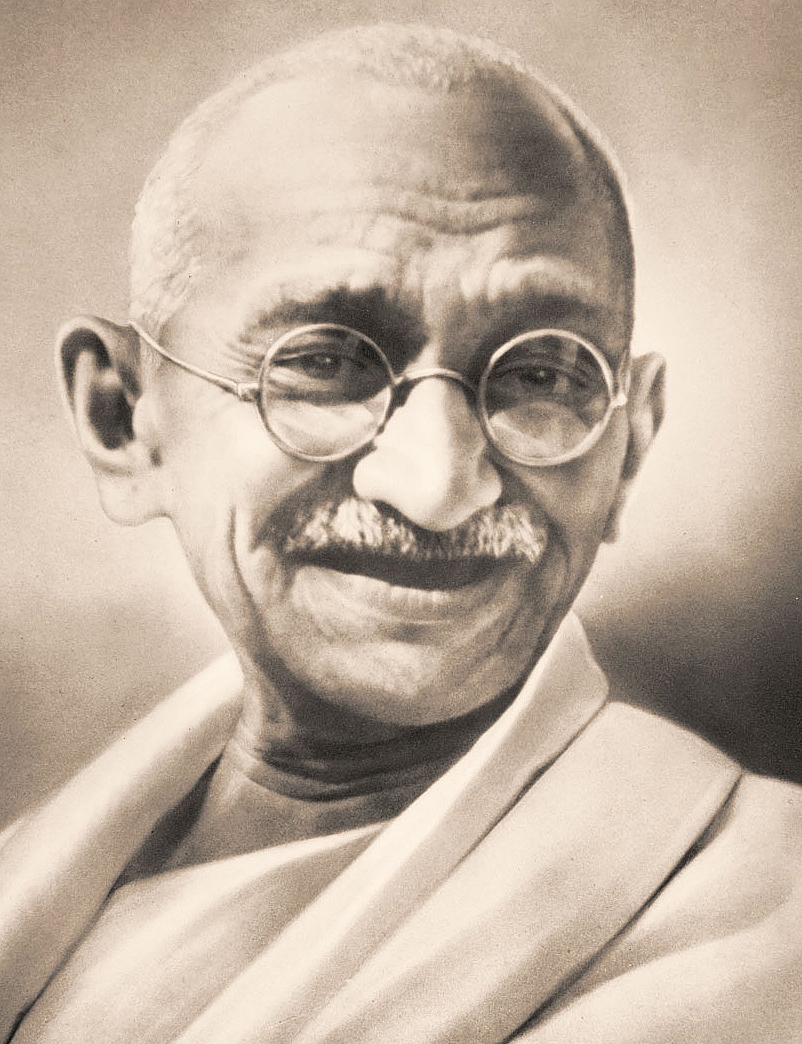
Mahatma Gandhi
(1869-1948) A political and spiritual leader of the Indian independence movement

"I wanted to know the best one who holds today undisputed sway over the hearts of millions of mankind. I became more than convinced that it was not the sword that won a place for Islam in those days in the scheme of life.

It was the rigid simplicity, the utter self-effacement of Prophet Muhammad, the scrupulous regard for his pledges, his intense devotion to his friends and followers his intrepidity, his fearlessness, his absolute trust in God and his own mission. When I closed the second volume (of the book about his life) I was sorry that there was not more for me to read about his great life."


Alphonse de Lamartine
(1790-1869) Poet, writer and politician
Histoire De La Turquie, Paris, 1854, Vol. li, Pp. 276-277

"Philosopher, orator, apostle, legislator, warrior, conqueror of ideas, restorer of rational dogmas, of a cult without images; founder of twenty terrestrial empires and of one spiritual empire. That is Muhammad. As regards all standards by which human greatness may be measured, we may as well ask, is there any man greater than him?"


William Durant
(1885-1981) Historian, philosopher, and writer. Author of "The Story of Civilisation", part 4, vol. 4, p. 25

"His name, meaning "highly praised", lent itself well to certain Biblical passages as predicting his advent. Muhammad was never known to write anything himself; he used an amanuensis. His apparent illiteracy did not prevent him from composing (i.e. conveying the Holy Qur'an which was revealed to him and regarded as) the most famous and eloquent book in the Arabic tongue, and from acquiring such understanding of the management of men as seldom comes to highly educated persons."

Note: The word amanuensis means someone who writes what is dictated to him. William Durant used the word "composing" which is unacceptable from the Islamic perspective as Muslims believe the Holy Quran is a literal Divine revelation from Allah (The Lord of all beings) to Muhammad through Archangel Gabriel.


Johann Wolfgang Von Goethe
(1949-1832) A great European poet. Noten und Abhandlungen zum Westslichen Dvan, WA I, 7, 32

"He is a prophet and not a poet and therefore his Quran is to be seen as Divine Law and not as a book of a human being; made for education or entertainment."


Thomas Carlyle
(1795-1881) Historian, philosopher and author of "Heroes and Hero Worship and the Heroic in History"

"How one man single-handedly, could weld warring tribes and wandering Bedouins into a most powerful and civilized nation in less than two decades."

Note: Thomas Carlyle made an attempt to draw a picture of the development of human intellect by using historical people as coordinates and accorded the Prophet Muhammad a special place in the book under the chapter title "Hero as a Prophet". In his work, Carlyle declared his admiration with a passionate championship of Muhammad as a Hegelian agent of reform.


Reverend Reginald Bosworth Smith
(Mohammad and Mohammedanism, London, 1874, p. 92)

"Head of state as well as the Church, he was Caesar and Pope in one; but he was Pope without the Pope's claims, and Caesar without the legions of Caesar, without a standing army, without a bodyguard, without a palace, without a fixed revenue. If ever any man had the right to say that he ruled by a right Divine, it was Muhammad, for he had all the power without instruments and without its support. He cared not for dressing of power. The simplicity of his private life was in keeping with his public life."

Micheal H. Hart

"My Choice of Muhammad to lead the list of the world's most influential persons may surprise some readers and may be questioned by others, but he was the only man in history who was supremely successful on both the religious and secular levels."